Archive for January, 2012

Independent Study for Yoga Teachers

Tuesday, January 31st, 2012

yoga certificationBy Dr. Paul Jerard, E-RYT 500 

Professional development is an important aspect of any career. Professionals from all disciplines seek to gain more knowledge, or to develop knowledge in a specific area of their field. Doctors, teachers, business people, and other professionals, know the importance of staying current with industry related trends and developments. Yoga teachers are no exception. It is important for Yoga instructors to stay abreast of any changes in the field of Hatha Yoga, as well as to educate themselves on the various aspects of living a Yogic lifestyle as a path to wellness and personal development.

Fortunately, there are many opportunities available for Yoga teachers today. Instructors can take on-line classes for convenience, take distance-learning Yoga teacher courses, or seek out a local workshop, seminar, advanced Yoga teacher training, or an intensive class. Since there are so many options, there really is no excuse for not keeping yourself knowledgeable and current.  Some certifying Yoga organizations give a list of subjects that teachers should research further.

The beauty of independent study is that you can study exactly what you like, on your own time, and at your own pace. If there is a chunk of knowledge that you are already quite familiar with, you can skip it, moving on to new information. You can work at your own pace, squeezing it in at night, early in the morning, on weekends, or whenever your schedule allows. Independent study gives you the flexibility to advance in your career without causing you to rearrange the rest of your life.

Yoga teachers might consider going into a more specialized area of Yoga. If you like working with kids, perhaps children’s Yoga is an area to explore deeper. Maybe you recently had a baby, realized the benefits of prenatal Yoga, and would like to continue helping expecting mothers. Perhaps your interest lies in the meditation and pranayama (Yogic breathing) aspects of Yoga, and you would like to learn how to help others heal through breath and meditation. Wherever your interests lie, seek out a way to increase your knowledge and continue to grow as an instructor.

Students are drawn toward Yoga teachers who are knowledgeable, and can answer any questions or concerns that come up during the course of study. Seeking inner peace and joining the mind, body, and spirit are all part of the basic Yogic philosophy. Instructors will find that they are on a true path to achieving their spiritual goals when they seek to improve themselves as teachers of Yoga. Independent study is a simple, but important, step toward becoming the best Yoga teacher you can be.

© Copyright 2012 – Aura Wellness Center – Publications Division

To see our selection of Online Yoga teacher training courses, please visit the following link.

http://www.aurawellnesscenter.com/store/

FREE Yoga Report. FREE Yoga Newsletter. FREE Yoga Videos. Free Podcasts. Bonus: Free Yoga e-Book, “Yoga in Practice.”

FREE CONTENT: If you are a Yoga Teacher, Yoga studio, blogger, e-zine, or website publisher, and are in need of quality content, please feel free to use my blog entries (articles). Please be sure to reprint each article, as is, including the resource box above. Namaste!

Meditation to Reduce Depressive States

Monday, January 30th, 2012

yoga teacher trainingBy Kimaya Singh

For thousands of years, sages have taught that meditation increases positive emotions and decreases negative ones. In our chaotic modern world, we use the word “depression” to describe a wide gamut of conditions ranging from temporary blues to disabling illnesses. Because it means so many things to so many different people, statistics dealing with diagnosis, symptoms, and treatments can be confusing or even misleading. While mild forms of depression often respond well to healthy diets, exercise, and meditation, others are more resistant to treatment and less likely to go away on their own.

Clinical depression can cause feelings of hopelessness, despair, sadness, even suicidal thinking. Although the proper medication can save lives, antidepressants often have side effects and may be dangerous, especially for pregnant women and children. Relapses are common when patients stop taking the pills, and healthy alternatives are the focus of continuing research.

Recent studies show that, in some cases, meditation may be a good alternative. When scientists at the Centre for Addiction and Mental Health in Ontario explored the use of MBCT, or mindfulness-based cognitive therapy, as a replacement for prescription drugs, they found it helped participants regulate emotions; recognize triggers and signs of relapse; and balance their lifestyles and moods.

According to the Archives of General Psychiatry, doctors treated all 84 participants in the study with antidepressants until their depression went into remission. Then they divided them into three groups:

• One group took placebos.

• One group stayed on antidepressants.

• One group stopped taking medication and practiced MBCT.

After 18 months, they made the following discovery:

• Those on placebos had a 70% rate of relapse.

• Those who stayed on antidepressants and those who practiced meditation experienced a relapse rate of around 30%.

Other studies examined the use of Transcendental Meditation in the treatment of veterans suffering from PTSD-related symptoms. Findings published in the June 2011 issue of “Military Medicine” show that TM increases the activity in the frontal lobe of the brain, the area involved in the regulation of emotions – an indication that meditation helps to reduce the “fight or flight” response and triggers the release of endorphins.

While mindfulness and mantras appear to minimize depressive states, it may be best to avoid styles that are too challenging or those than encourage rumination. Practices that agitate the mind or cause frustration may actually increases feelings of helplessness and failure. A state of awareness and the use of proper breathing techniques, however, restore vitality, reduce anxiety, and balance emotions.

© Copyright 2012 – Aura Wellness Center – Publications Division

To see our selection of Online Yoga teacher training courses, please visit the following link.

http://www.aurawellnesscenter.com/store/

FREE Yoga Report. FREE Yoga Newsletter. FREE Yoga Videos. Free Podcasts. Bonus: Free Yoga e-Book, “Yoga in Practice.”

FREE CONTENT: If you are a Yoga Teacher, Yoga studio, blogger, e-zine, or website publisher, and are in need of quality content, please feel free to use my blog entries (articles). Please be sure to reprint each article, as is, including the resource box above. Namaste!

The Need for Corporate Yoga

Sunday, January 29th, 2012

yoga teacher training courseBy Dr. Paul Jerard, E-RYT 500

Yoga has been proven as an extremely effective way to relieve stress, strengthen the body and mind, and improve overall health. Those who practice Yoga, on a regular basis, understand just how powerful the effects can be. Over time, the body seems to crave the feelings of strength and limberness a Yoga session brings. Yoga also provides a feeling of peace and well-being to the mind. Employees with high stress levels can benefit greatly from regular Yoga routines. Employers who offer corporate Yoga will also see positive results, including higher productivity, fewer sick days, and a more positive attitude among employees.

Many corporate employees spend their entire day sitting in front of a computer screen. Over time, this causes problems within the body. Employees face issues like sore or injured backs, carpel tunnel syndrome, weight issues, or overall stiffness in the body. The body was not really designed to sit for that many hours in a row, and excessive sitting does have negative effects. Productivity, creativity, and motivation can also begin to waver as the day wears on. Yoga, and its associated breathing exercises, increase blood flow to the brain, which jump-starts the brain and gives it the necessary strength to finish the workday.

Corporate Yoga can take on a number of different forms. Often times, a company hires a certified Yoga instructor to lead a series of scheduled classes throughout the day or week. Yoga classes can be held in a board room, break room, or other common area. Some facilities have separate exercise and workout rooms available. Employees can then choose when to attend a Yoga class. Corporations, who are short on funds, but want to offer Yoga benefits to employees, can call in a certified Yoga teacher to give a seminar. Employees can learn some basic poses and their benefits. Then, employees can choose when to implement a Yoga break throughout the day.

Whether employees block out an hour at a time to practice Yoga, or opt for several five-minute breaks throughout the day, the benefits will begin to show. Yoga is rewarding to learn and practice. Yoga poses can be adapted to suit every person, without discrimination. Even employees, who are currently dealing with injuries or other health issues, can reap the benefits of Yoga. It makes sense to implement Yoga into the workplace.  With proper guidance, everyone can do it, and it requires little equipment. Yoga can bring any company’s employees the health and prosperity they deserve.

© Copyright 2012 – Aura Wellness Center – Publications Division

To see our selection of Online Yoga teacher training courses, please visit the following link.

http://www.aurawellnesscenter.com/store/

FREE Yoga Report. FREE Yoga Newsletter. FREE Yoga Videos. Free Podcasts. Bonus: Free Yoga e-Book, “Yoga in Practice.”

FREE CONTENT: If you are a Yoga Teacher, Yoga studio, blogger, e-zine, or website publisher, and are in need of quality content, please feel free to use my blog entries (articles). Please be sure to reprint each article, as is, including the resource box above. Namaste!

Senses and Sensibility – Awareness is the Key to Yoga

Saturday, January 28th, 2012

By Claude Aoukar

yoga teacher trainingWhen teaching yoga, I used to start the session in Tadasana asking the students to breath in and out, feeling each vertebra of the body in order to achieve focus, concentration and stillness of the mind. One day I was interrupted by a young athletic lady who asked me, “What were the advantages of going so slow?” I felt that a few notions of chakras and band has would be necessary to answer her demands.

She was a beginner and was trying yoga to relax, gain some flexibility and burn some fat. I did not want to scare her with some yoga philosophy or complicated words.

So I asked the class to go back to Tadasana, to divide their skeleton up to the skull to seven parts, root, navel, solar plexus, heart, throat, eyebrow and top of the head.

Now, let’s draw a mirror with our palms facing our nose and mouth, and we started gently fogging this mirror. We closed our eyes and went with a soft breath exploring down and up the 7 centers of energy. After a couple of inhalations and exhalations, we relaxed. Then, I told them that this was the essence of yoga because unlike many other stretching activities, in yoga we are aiming the dormant cells in our body in order to gently awakening them. This was the secret of a better health, better detox, and more psychological balance. Breathing means life. Better breathing would be a better life.

After this elementary class of pranayama, I noticed a real change of attitudes in my class. The students became more keen on going in slow motion as if looking for the tiniest ailment of their body, they were trying to oxygenate it and heal it using all their senses and gaining more and more sensibility.

Awareness is the key to a good yoga session.

Since then I decided to integrate bandhas and even some Viloma Pranayama to my beginners class of yoga. The more the students become acquainted with the art of distributing energy within their body, the more they felt the limits and nodes to adjust and defuse, the better their yoga session got.

Trikonasana was an ideal pose to grasp the subtle meaning of bandhas. When you exhale bending sideways you are unconsciously compressing your root Chakra as well as you navel one, turning the head upwards would also compress the throat chakra. All what it takes to feel and get to the notions of bandhas is progressive awareness of your breathing squeezing and diminishing in each of the 3 parts. When a student understands that this movement helps diffuse the energy to the dormant cells beneath and above the mentioned chakra, he is willing to follow his breathing with more sensitivity, perception and correct knowledge. Synchronizing between the body and the mind becomes a subtle game to enjoy.

Inasmuch as we inhale lifting the arm up, we are inflating progressively the abdomen, the lower chest and the upper chest. Learning to slightly pause between each part gives you the dimension of the life- force you are inducing and channeling within your body up to your brain.

This awareness of the breathing is randomly present in any posture of yoga you pick. All you need is, doing it slowly and focusing your mind to absorb the sweetest inner sound coming from within.

Namaste

Claude Aoukar

YAMAS AND NIYAMAS -THE EIGHT FOLD PATH OF THE YOGA

Friday, January 27th, 2012

yoga teacher training courseBy Dr. Rita Khanna

According to the Yoga Sutras, the Yamas and the Niyamas are the first two steps in the eight-fold path of Yoga which are a series of short sentences of wisdom through which Sage Patanjali conveys his teachings. The Yamas and Niyamas are self-disciplinary qualities that everyone should have and observe for their own spiritual development. One may practice Asanas and have a fit body. One may practice Pranayama and balance the Pranic energy, the Nadis. One may practice Pratyahara and Dhyana and reach deeper state of consciousness, but what use is that if one does not practice the Yamas and Niyamas. The Yamas and Niyamas create a fit and balanced mind.

YAMAS

The five Yamas are Ahimsa (non-violence), Satya (truthfulness), Asteya (abstinence from theft, honesty), Brahmacharya (being established in divine consciousness), and Aparigraha (non-possessiveness). The Yamas are mainly qualities that the spiritual aspirant should have in order to communicate and interact with the outside world and the people living in it.

Ahimsa:

Ahimsa, non-violence, not only means not causing harm or pain to any creature in thought, word or action, but also not having even a hint of aggression within your being. Himsa (violence) is not only physical violence, but also includes manipulation, hurting someone’s feelings, psychic influence and so on. Himsa is not considered to be violence if it is to save your life, or if you kill one in order to save many. It will be easier to observe Ahimsa if we remember that whatever we do, good or bad, will come back to us in this life or in the next, whether we believe in reincarnation or not. Good actions produce good results, while bad actions produce bad results. This is called (the law of) Karma and you can’t escape it. Someone is always watching over you.

A good example is the story of the Sufi saint who called his disciples together and said, “I have five birds, one for each of you. Take them and kill them in separate places, but no one must see you doing it. When you bring them here, we’ll have a feast.” So they all came back sooner or later and gave explanations about where they killed their birds and how no one saw them. When the last disciple came, he said “I’m sorry Guruji, I failed you. I could not kill it. Wherever I went, I felt as though someone was watching me.” He turned out to be the best disciple.

Satya:

Satya, or truth, is the second Yama, and also a very important qualification. Satya is not merely abstinence from telling lies, but also the ability to see the truth, to be aware of the truth behind everything. If you tell people what they should or should not do and then do whatever pleases you, you are a hypocrite. You say one thing and do another, thereby not being true even to yourself. One lies to escape the consequences of the actions of oneself or one’s associate. This is a manifestation of the petty mind. Therefore, Satya also helps in overcoming the petty mind.

Asteya:

Asteya, the third Yama, is commonly known as honesty (in the sense of ‘abstinence from theft’). To be able to follow Asteya, we must be satisfied with what we have, our personal belongings, our way of thinking, what we do, where we are, who we are, etc. In other words, we must not be greedy and should try to be contented. We steal things because we desire them. To be able or to be strong enough to resist the temptation to steal the object that one desires, one’s mind must be strong. Hence, through mastering Asteya, one purifies the mind of desires and Vrittis.

Brahmacharya:

To most people, following Brahmacharya would mean suppression of desires. Brahmacharya should not be suppression, and suppression is not the remedy for overcoming the lower mind or controlling any of its instinctive drives. Unless one is established in the higher mind, suppression is of no avail. One may be able to stop oneself from satisfying any of these instincts, but one cannot suppress the mind from dwelling upon them continually. That is not Brahmacharya, being established in the higher mind, and the higher mind does not waste time by dwelling on such matters.

There is a story about two monks on a pilgrimage in (supposedly) strict brahmacharya. When they come across a lady unable to cross a large puddle, the senior monk carries her across to safety. Shocked, the younger monk eventually remonstrates with the senior monk, who replies, “You are still carrying her in your head while I left her by the banks of the puddle!” The younger monk is a perfect example of the opposite of Brahmacharya.

Swami Satyananda says, “When firmly established in Brahmacharya, the Yogi gains vigour, energy and courage, whereby he becomes free from the fear of death. Thus, Brahmacharya is an important way of overcoming the Klesha called Abhinivesha, which is fear of death.”

Aparigraha:

Aparigraha, the fifth and last of the Yamas, is non-possessiveness (also known as abstinence from greed). It is actually complete freedom from greed or covetousness. You should not try to possess more than you minimally need. When we become non-possessive or non-attached, we become impartial and in that way the conditioned love, affection, compassion and so on becomes unconditional, and not merely restricted to family, friends, relations, etc.

NIYAMAS

The Niyamas are the self-disciplinary qualities which are entirely devoted to helping the aspirant on their spiritual journey. The five niyamas, or five fixed rules of self-discipline, are: Shaucha (cleanliness), Santosha (contentment), Tapas (austerity), Swadhyaya (study of the self) and Ishwara Pranidhana (complete self-surrender to God).

Shaucha:

Shaucha, cleanliness, is the first Niyama. Not only external cleanliness, like having a shower, brushing your teeth, etc., but purity of actions, purity of mind from evil and distracting, unnecessary thoughts and from bad, haunting memories. Cleanliness of the environment and of oneself is necessary for hygienic reasons, but the state of the environment also affects your mind. If it is clean and tidy, you will become more centred and will be able to concentrate properly, but if it is an unhygienic, messy or untidy environment, your mind may become disorganized. That is why it is better to tidy up your room in the morning. Such things seem trivial, but they help to keep the mind free of clutter and make it sharp and clear. In other words, practicing Shaucha on the physical plane also affects the mind on the pranic and mental levels.

Sage Patanjali says in the Yoga Sutras that by practicing shaucha on the physical plane, one gains indifference towards the body and non-attachment towards others in the course of time. He says that when your mind is pure through shaucha, you become cheerful and fit to practice concentration (dharana) and sense control (pratyahara), as the mirror of the mind is clean and, therefore, you are able to see your real self reflected in it.

Santosha:

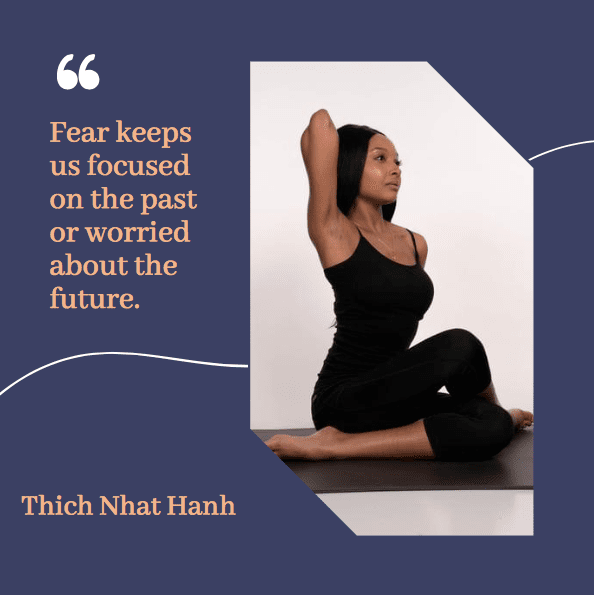
Santosha, contentment or satisfaction, is the second Niyama. Santosha is being content with one’s actions and with what one has, what one is, where one is, and with what one has done or what one is doing. It also means to be content about where one is, whether it be concerning time or space. You should not daydream about the future nor should your mind linger in the past. Be content with where you are, or you will never be happy or feel true satisfaction. Also, Santosha is being content with what one is. If you do not like being what you are, you won’t find any happiness in life either. You have to be contented with what you do, if you have done your best. A beggar is a king if he is contented with what he has, while a king is like a beggar if he still desires more riches to add to his treasure troves and vaults by imposing more taxes on the poor.

Tapasya:

The third Niyama is Tapasya (Tapas), austerity or moderation – depending upon one’s capacity. The main purpose of attaining Tapasya is to be able to meditate properly. It creates a controlled mind which will not accept any interference from the body, like “I’m thirsty!” or “I want food!” or “that hurts!” etc. It also hardens the body, so that these desires aren’t too frequent. It strengthens the organs and makes them healthy in order not to experience painful distractions during meditation. Thus it leads to Pratyahara or abstraction of the senses.

Swadhyaya:

Swadhyaya is the fourth Niyama. Swa means ‘self’ here; therefore, swadhyaya is actually the study of the self, or self-analysis. One must be the Drashta, the witness, the observer. The higher type of knowledge is actual experience, while the lower form is learning directly from books and further lower form is learning from books but not understanding a thing that one is reading. Through Swadhyaya we can improve ourselves and guide ourselves on the right path to some extent without the help of the Guru.

Ishwara Pranidhana:

Ishwara Pranidhana, or complete self-surrender to God, is the last Niyama. It is the time when one completely lets go of all ego and surrenders to destiny. Sage Patanjali says in the Yoga Sutras that one can even attain the highest form of Samadhi, the final stage before Kaivalya, if one can truly and fully surrender to God. Your self-surrender should be free and unconditional.

There is a story about a dedicated monk deep in Meditation in his cave. Suddenly there was a freak flood and the town nearby was filled with gushing water. Some good-natured people paddled laboriously on their little raft to try and save the monk. But when they reached his cave, the monk said, “Do not worry. I am a pious man who has been serving God all his life. God will not desert me now. Never fear, He will come and save me with His own hands.”A few minutes later a yacht with five men arrived. They attempted to rescue the monk, but received the same reply. Finally, a rescue helicopter arrived and hovered outside the cave, but the monk sent them away.The water rose, flooded the monk’s abode and he drowned. When he reached heaven he said to God, “I’ve been worshipping you all my life and yet you didn’t come and save me when I needed you the most!” And God replied “Well, I don’t know what you expected. First I sent you a raft, then a yacht, then a first class helicopter, and you only said silly things like ‘God will save me with His own hands.’ The raft, yacht and helicopter were my hands.”

It all seems to be a mental process, however, the physical outcome is that when one surrenders to and realizes Ishwara, one never remains the same because one cannot realize God if one has even the smallest hint of a human ego.

CONCLUSION

The Yamas and Niyamas are all in a way interrelated, so they don’t allow you to skip any of them if you are sincere in your desire to master them. Also, the Yamas and Niyamas are not meant only for Yogis and Sannyasins, but for everyone to practice. You can, for example, take one of the Yamas or Niyamas that you like and practice it until you think you’ve perfected it; and then go on to another one, and so on until you’ve perfected them all! So keep practicing the Yamas and Niyamas, even while you are practicing another branch of the eight-fold path.

Aum Shanti

If you feel inspired by this article, feel free to publish it in your Newsletter or on your Website. Our humble request is to please include the Resource as follows: -

Courtesy: Dr. Rita Khanna’s Yogashaastra Studio.

A popular studio that helps you find natural solutions for complete health.

Also conducts online Yoga Courses & Naturopathy Guidance.

Mobile: + 919849772485

Ph:-91-40-65173344

Email: yogashaastra@gmail.com

Website: www.yogashaastra.in

Dr. Rita Khanna

Dr. Rita Khanna is a well-known name in the field of Yoga and Naturopathy. She was initiated into this discipline over 25 years ago by world famous Swami Adyatmananda of Sivananda Ashram in Rishikesh (India).

She believes firmly that Yoga is a scientific process, which helps us to lead a healthy and disease-free life. She is also actively involved in practicing alternative medicines like Naturopathy. Over the years, she has been successfully practicing these therapies and providing succour to several chronic and terminally ill patients through Yoga, Diet and Naturopathy. She is also imparting Yoga Teachers Training.

At present, Dr. Rita Khanna is running a Yoga Studio in Secunderabad (Hyderabad, India).

The Need for Yoga in Preschool

Friday, January 27th, 2012

yoga instructor certificationBy Faye Martins 

Yoga is great for people of all different ages, but is it beneficial in a preschool setting? The answer is a resounding yes, and here’s why.

It might be hard to imagine preschoolers successfully performing a discipline like yoga, but with the proper modifications it’s excellent for younger children. Preschoolers often have a hard time focusing during the school day, and this is usually because the child has pent up energy that needs to be spent. Offering yoga in preschool gives children a positive outlet for their physical energy, meaning that they will have improved focus and better behavior when expected to sit quietly and listen during the rest of the day.

In addition, preschoolers are known for having very active imaginations. Many preschool aged children spend their days daydreaming in their own little world. It’s easy for these kids to fall behind their peers in terms of grade level due to simple lack of attention. Imaginative children can be exceptionally bright, but they must learn to focus in order to really let their intelligence shine. For these children, yoga in preschool is a need.

Simple, age appropriate yoga poses teach young children body awareness, and also improve muscle tone and motor skills. Preschoolers are still learning about balance and what their bodies can and cannot do. Yoga supports this type of learning. In addition, the poses in yoga practice have special appeal for young children, who will be delighted to imagine themselves as the animals the poses are named for. This gives a positive creative outlet for a child’s imagination.

Learning how to sit still and focus on breathing, if only for a short span of time, will improve a child’s sense of mindfulness and reflection. Preschoolers easily lose themselves in the emotions and thoughts that they are feeling at the time, and it can be exceptionally hard for them to reset once their minds are on a specific train of thought. Preschoolers who learn how to do simple breathing exercises during a warm up or cool down will likely have an easier time switching gears during the rest of the school day, which is essential for success throughout the school years.

Preschoolers also need structure and routine more than their older counterparts in order to feel safe and secure. Having yoga as a daily part of preschool gives young children a sense of stability, because it’s something they can count on everyday.

The ideal length of a yoga session for preschoolers should be short and sweet, since the attention span of a young child isn’t very long. Fun should always be the primary focus during these workout sessions.

By offering yoga in preschool, schools can give their students a foundation of fitness and flexibility along with improved focus, which leads to greater learning. What could be better than that?

© Copyright 2012 – Aura Wellness Center – Publications Division

To see our selection of Online Yoga teacher training courses, please visit the following link.

http://www.aurawellnesscenter.com/store/

FREE Yoga Report. FREE Yoga Newsletter. FREE Yoga Videos. Free Podcasts. Bonus: Free Yoga e-Book, “Yoga in Practice.”

FREE CONTENT: If you are a Yoga Teacher, Yoga studio, blogger, e-zine, or website publisher, and are in need of quality content, please feel free to use my blog entries (articles). Please be sure to reprint each article, as is, including the resource box above. Namaste!

What Is The Bhagavata Purana?

Thursday, January 26th, 2012

yoga teacher certificationBy Shahid Mishra

The Bhagavata Purana is also known as the Srimad Bhagavatam and is one of the main texts of Indian literature. It was written in approximately 3,000 B.C. The primary focus of The Bhagavata Purana is the fire of devotion of love of the incarnations of Vishnu, in particular the incarnation of Krishna. This great Sanskrit text is composed of twelve song-stories of almost twenty thousand verses. The Bhagavata Purana elucidates the play of Krishna in many different settings and situations. The song-stories are teaching stories about the practice of Bhakti Yoga in order to attain union with the divine.

The different Puranas, including the Bhagavata Purana, were written to teach people the immanent spiritual teaches of the esoteric Vedic principals and practices. The Puranas were, in essence, a way to make the Vedic teachings relevant and assimilable into the lives of many Indian people. The teachings found in the Puranas elucidate how to live a dharmic, happy and fulfilled life through stories, legends, chronicles of historical events and concrete examples of devotion to God.

Because the goal of the Puranas is to teach common people the tenets of ancient Vedic teachings, each Purana gives importance to a particular deity. The intense bhakti described in the Bhagavata Purana is directed towards Krishna as the divine in human form. The Bhagavata Purana includes detailed instructions on the practice of Bhakti Yoga, including information about various different types of Bhakti or devotional love. The tenth song of the Bhagavata Purana is solely dedicated to Krishna and includes some of the most detailed information about Krishna’s exploits and adventures as told through a collection of sacred stories and myths.

The Bhagavata Purana describes in lustrous detail the appearance and adventures of the ten main incarnations of Krishna. Krishna’s incarnations appear in order to reestablish dharmic religious principles, have fun, enjoy the beauty of life and destroy evil. The Bhagavate Purana is a wonderfully light-hearted compendium of teaching stories. It beautifully illustrates the beauty and fun of the play of the divine Kundalini Shakti. It also enumerates and explains many profound teachings of the ancient Vedic scriptures in a format that is easily understandable to most people.

In India, the caste system was very set. If you were born into the Brahman caste, you would receive the benefit of an education and would have access to many spiritual teachings, including the teachings in the Vedas. If you were born into a lower caste, you may not have the benefit of learning to read or write and may not even have been invited to listen to the oral teachings of the Vedas. The Puranas, such as the Bhagavata Purana, made the teachings of the Vedas accessible to all people in a fun, uplifting and enlivening way.

© Copyright 2012 – Aura Wellness Center – Publications Division

To see our selection of Online Yoga teacher training courses, please visit the following link.

http://www.aurawellnesscenter.com/store/

FREE Yoga Report. FREE Yoga Newsletter. FREE Yoga Videos. Free Podcasts. Bonus: Free Yoga e-Book, “Yoga in Practice.”

FREE CONTENT: If you are a Yoga Teacher, Yoga studio, blogger, e-zine, or website publisher, and are in need of quality content, please feel free to use my blog entries (articles). Please be sure to reprint each article, as is, including the resource box above. Namaste!

What Are Moon Salutations?

Wednesday, January 25th, 2012

become a yoga instructorBy Dr. Paul Jerard, E-RYT 500

A Moon Salutation, Lunar Flow, or Chandra Namaskar, is basically the opposite of a Sun Salutation. Where the Sun Salutation brings heat and energy into the body, the Moon Salutation brings calm and relaxation. The Lunar Flow provides a counter balance to the Sun Salutation and is often done at the end of an evening Yoga asana session. Moon Salutations are often practiced at night – when you want to unwind after a long day.

A Lunar Flow honors the feminine energy within the body, as opposed to the masculine nature of a Sun Salutation. Both men and women can perform Moon Salutations and Sun Salutations, of course. They help shift the energy within the body, providing balance and calm to the mind and body. They can help uncover inner qualities – such as wisdom, creativity, and intelligence. Chandra Namaskar can open up the path toward inner calm and provide balance to the mind and body.

Although Moon Salutations can be done throughout the month, some Yoga practitioners believe that practicing them under a full moon can be particularly powerful. However, in some traditions, Yoga is not practiced during a full or new moon, keeping these as sacred days of rest.

There are several variations of Chandra Namaskar. It is a series of flowing poses, where the body moves fluidly with each deep inhale and exhale. For the following variation, begin in Mountain pose, then transition to a Crescent Moon side bend, then Goddess pose, Star pose, Triangle pose, Head to Knee pose, Lunge, Squat, Lunge on the opposite side, Head to Knee with the opposite leg, and complete the series by performing the poses in the reverse order, until you are back to Mountain pose.

Remember to breathe deeply, and slowly, with each new pose. This sets a much slower pace than most flowing asana sequences. Focus on your breath, while bringing inner calm and peace into the mind and body. You may repeat the Moon Salutation, as many times as you want; but if you intend on sleeping, four rounds should be the maximum, and it may be useful to practice stage-by-stage relaxation after you have finished your asana session.

If you prefer a more calming option for the start of the day, you might even try Moon Salutations in the morning. This is not a traditional approach, but it is up to each individual to decide when they feel a Moon Salutation would benefit them the most. Yoga instructors, teaching a group of students, who want to release stress, will probably benefit the class most by performing the Moon Salutation after warming up and at the beginning of an evening asana session, to send students away feeling calm and centered.

© Copyright 2012 – Aura Wellness Center – Publications Division

To see our selection of Online Yoga teacher training courses, please visit the following link.

http://www.aurawellnesscenter.com/store/

FREE Yoga Report. FREE Yoga Newsletter. FREE Yoga Videos. Free Podcasts. Bonus: Free Yoga e-Book, “Yoga in Practice.”

FREE CONTENT: If you are a Yoga Teacher, Yoga studio, blogger, e-zine, or website publisher, and are in need of quality content, please feel free to use my blog entries (articles). Please be sure to reprint each article, as is, including the resource box above. Namaste!

Giving of Dakshina on the Bhakti Yoga Path

Tuesday, January 24th, 2012

yoga teacher trainingBy Kimaya Singh

Outside of India, Hatha Yoga is well known.  Hatha is one of the original fitness oriented styles from India. Yet, the most common form of Yoga inside India is Bhakti.  Bhakti is clearly different from Hatha for many reasons.  Hatha Yoga schools in the west tend to charge for lessons, materials, and other services, while Bhakti schools run on donations and volunteers.  Some members of Bhakti ashrams give everything they have (work and money) for their Guru and ashram.  On the other hand, Hatha schools in the west would be extinct if they depended on donations and seva (Volunteer work; selfless service or work offered to one’s Guru).

The giving of Dakshina or financial support to one’s Guru and the activities he or she supports is a very powerful practice on the Bhakti Yoga path. Bhakti is translated in Narada’s Bhakti Sutras as intense love for one’s teacher or Guru. This divine love and longing to merge with the teacher propels the Bhakta through all sorts of difficult obstacles on the spiritual path. Inherent on the Bhakti Yoga path is the element of active participation in the practices and community of that particular path. This participation can come in many forms such as worship, meditation, selfless service and mantra repetition. Active participation on the Bhakti Yoga path may also come in the form of financial support of one’s Guru and the retreat centers that disseminate his or her teachings.

The practice of Dakshina is a bit uncanny. At first, this practice may feel like an obligatory donation during the holiday season to your local charity organization. However, truly offering Dakshina to a living saint, the teaching facilities of that saint, as well as the spiritual community at large, immediately connects you with the divine grace of that lineage. The feeling is palpable and the effect is instantaneous. A feeling of deep protection and abundance are often experienced by a Bhakta who offers Dakshina to his or her Yoga teacher. As you circulate money into your Guru’s activities, more abundance will most likely flow into your life. However, both the path you have chosen and the Guru or teacher you have chosen to learn from must be “true,” or the practice of Dakshina will not bear the same fruit in your life.

The practice of Dakshina is common throughout the world. In Christian circles, it is called tithing. Generally, a church member is expected to tithe or give 10% or his or her income to the church. In Eastern spiritual traditions, there is a similar expectation. Just think of the roaming Buddhist monk who must beg for one meal a day from the “householders” in the area. The Buddhist monk traditionally offers teachings to the local people, and they in turn offer physical sustenance to the monk. It is believed that supporting the spiritual path that you are on, if it is a true lineage and resonates deeply with you, will bring a feeling of fullness, peace and abundance into your life. A word to the wise, only give what you are able to give while respecting your own needs. In this way, you will maintain balance, respect for yourself and a deep connection to your Guru and the profound blessings of divine grace within your own life.

Conclusion

Yoga teachers and practitioners sometimes have a misconception about money.  Energy comes in many forms.  Money is a form of energy, which can be used for good things or bad things.  It is the way we use it that defines our true motives.  To expect a local Yoga studio to run without supporting it is wishful thinking at best.  To sacrifice everything for a Guru, who does not deserve it, is foolish thinking.  Choose the moderate path and be aware of your Yoga teacher’s actions.  Sheep are led by a shepherd or a wolf.  If you allow yourself to blindly “follow the leader,” you might hope your Yoga teacher has the best of intentions.  It is best to develop a relationship with a teacher who encourages you to think for yourself.

© Copyright 2012 – Aura Wellness Center – Publications Division

To see our selection of Online Yoga teacher training courses, please visit the following link.

http://www.aurawellnesscenter.com/store/

FREE Yoga Report. FREE Yoga Newsletter. FREE Yoga Videos. Free Podcasts. Bonus: Free Yoga e-Book, “Yoga in Practice.”

FREE CONTENT: If you are a Yoga Teacher, Yoga studio, blogger, e-zine, or website publisher, and are in need of quality content, please feel free to use my blog entries (articles). Please be sure to reprint each article, as is, including the resource box above. Namaste!

How to Release Your Inner Strength with Meditation

Monday, January 23rd, 2012

yoga teacher trainingBy Sangeetha Saran

All of us go through times when we feel overwhelmed by the trauma, stress, or loss in our lives. What makes one person persevere and overcome obstacles while another gives up at the first hint of failure? Many Yoga classes are filled with students who are developing the inner strength to deal with stress.  Chances are that it is not the stressful circumstances, but the way we react to them and the solutions we discover that determine the outcome. While each of us is born with certain personality traits, we can learn from Yoga and meditation to be more resilient by embracing new opportunities, being open to challenges, and learning from our mistakes.

Our life experiences, our circumstances, and our belief systems partially determine our ability to bounce back from adversity, and we have little control over some of these factors. However, our inner strength, or resilience, is a different story. We determine how we want to interpret the events in our lives, and our emotional state is a result of those decisions. Fortunately, we can learn the skills necessary to deal with change, and one of these is meditation.

Meditation helps to build resiliency and release inner strength in several ways:

• It gives us a sense of connectedness and helps us detach from the fear of loss or pain.

• It opens the heart and brings a sense of freedom.

• It helps us to see trauma and loss as part of a purification process.

• It encourages perseverance and dedication.

• It builds compassion and awareness.

• It enables us to reach a state of surrender and acceptance.

• It leads to a sense of purpose and fulfillment.

Meditation serves as a metaphor for life itself. Not only does it require the development of dedication and self-control, but it also illustrates the value of working toward and achieving long-term goals. The knowledge that we can rise to the occasion in the midst of doubt and fear is an invaluable lesson. Henry David Thoreau expressed the value of releasing internal strength by saying, “What lies behind us and what lies ahead of us are tiny matters compared to what lives within us.” The answers lie deep inside of us, and meditation is the key that opens the door.

© Copyright 2012 – Aura Wellness Center – Publications Division

To see our selection of Online Yoga teacher training courses, please visit the following link.

http://www.aurawellnesscenter.com/store/

FREE Yoga Report. FREE Yoga Newsletter. FREE Yoga Videos. Free Podcasts. Bonus: Free Yoga e-Book, “Yoga in Practice.”

FREE CONTENT: If you are a Yoga Teacher, Yoga studio, blogger, e-zine, or website publisher, and are in need of quality content, please feel free to use my blog entries (articles). Please be sure to reprint each article, as is, including the resource box above. Namaste!