Archive for February, 2011

The Truth About Hatha Yoga Benefits

Monday, February 28th, 2011

yoga teacher coursesBy Sangeetha Saran

Almost all activities have some sort of benefit, and Yoga has more benefits than most.  In order to get the most out of Yoga, it is important to have realistic expectations of the practice and teacher.

Will Yoga Change My Life?

Most likely, however, yoga is a tool to change oneself. No one can really change you. No one can save you from yourself, not even the most advanced Yoga master. Yoga is a tool for inner change. Inner change won’t happen overnight, it is something that will need to be worked at. The only one who can do that work will be the student.

The Guru guides the student and merely serves as a signpost, pointing to what the student already knows on a level deep down inside. This is a beautiful journey for two individuals to share. In Yoga, you get what you give. If the student is lazy or is looking for a quick fix, they will likely leave disappointed, because that is not what Yoga is all about. Students who stick with the practice often report a higher quality of life than before they took up Yoga.

I Want An Attractive Body. Will Yoga Give Me A Sexy Figure?

Possibly, but the movements, techniques, and poses in the art of Yoga are certainly good at sculpting the physical form into something that is considered pleasant to look at. Combined with proper diet, Hatha Yoga is a superior exercise routine. However, the physical movements in Yoga serve a purpose beyond the sum of their parts.

The real results won’t be on the physical level, they will be on the spiritual plane of existence. Yoga’s movements serve to make the student aware of their body in ways never before possible in everyday living. Yoga serves as a catalyst for radical transformation. In comparison to this profound benefit, any physical gain pales in comparison. The body will be more fit and flexible, and the person within the body will be more beautiful than ever before.

Can’t I Just Buy a Yoga DVD?

DVDs are much better in the hands of Yoga teachers than the public. DVDs are used as educational tools in Yoga teacher training courses. If you are new to Yoga, you could work at home with DVDs, but you would be missing out on the guidance of a competent Yoga instructor.

A good teacher makes all the difference in Yoga practice. A true Yogi can guide and shape a student simply by sitting beside them. On the purely physical level, a master is greatly helpful in instructing movements. A DVD can’t give individualized guidance about how to do every Yoga technique.

© Copyright 2011 – Sangeetha Saran / Aura Wellness Center – Publications Division

Hatha Yoga for High Blood Pressure

Sunday, February 27th, 2011

yoga teacher trainingBy Sanjeev Patel, CYT 500

There is a reason hypertension is known as the “silent killer.” There are virtually no symptoms. Yet, it is quite common in the modern world, especially among the overweight and elderly.

Sufferers are often advised to alter their lifestyles to avoid stress. Meditation and Yoga can be the keys for many people to achieve success in this endeavor.

Diagnosing High Blood Pressure

Your doctor takes your blood pressure every visit. These days, self-diagnosis is simple with many inexpensive and effective home detection devices available.

Although many factors need to be considered, in general if the blood pressure is 140/90 it is considered to be borderline.

Any reading over 140/90 is considered to be a form of hypertension. It is important to lower the blood pressure to the 120/70 range, because high blood pressure can lead to much more serious health problems like heart attack or stroke. These conditions can lead to premature death. Early treatment of hypertension can prevent these deadly health issues.

Yoga Poses to Lower High Blood Pressure

Certain Yoga poses (asanas) have been shown to help manage stress and hypertension.

The Easy Pose (Sukasana) is recommended for stress reduction. If it is practiced after the Corpse Pose (Sivasana), this pose strengthens the spine, slows the metabolism, and promotes quiet stillness of mind. The Cat Pose, although not always advised for everyone with back issues, is designed to coordinate movement and breath. This will inspire calmness and muscle relaxation.

For people new to Hatha Yoga, the Half Spinal Twist should only be done in the presence of a Yoga instructor. If practiced regularly it will not only reduce blood pressure, but will have added benefits for the liver and kidneys as well.

Simple stretching can be very beneficial in lowering blood pressure. Shoulder stretches relieve tension throughout the upper back as well as the shoulders. Try the Standing Spread Leg Forward Fold to stretch the back and inner parts of the legs. You can use a chair as a prop or for balance.

Even simpler Yoga stretches are helpful in lowering blood pressure:

- Bend at the hips.

- Keep your head at heart level, with your torso parallel to the floor.

- Reach in the direction of your knees.

- Let your arms hang loose.

- Rotate the arms clockwise and counter clockwise.

- Lift and hold both legs from a prone position to various heights.

- Reach and stretch your arms above your head.

Daily practice of these and other Yoga exercises can be very helpful in lowering your blood pressure to normal levels and maintaining them.  Please note that this article is informational in nature. You should always consult with your own doctor before beginning any exercise routine.

Yoga posture contraindications are an important part of each Yoga teacher training course at Aura Wellness center.

© Copyright 2011 – Sanjeev Patel / Aura Wellness Center – Publications Division

Sanjeev Patel is a certified Yoga teacher and an exclusive author for Aura Wellness Center.

To see our selection of Online Yoga teacher training courses, please visit the following link.

http://www.aurawellnesscenter.com/store/

FREE Yoga Report. FREE Yoga Newsletter. FREE Yoga Videos. Free Podcasts. Bonus: Free Yoga e-Book, “Yoga in Practice.”

FREE CONTENT: If you are a Yoga Teacher, Yoga studio, blogger, e-zine, or website publisher, and are in need of quality content, please feel free to use my blog entries (articles). Please be sure to reprint each article, as is, including the resource box above. Namaste!

Hatha Yoga for Heart Conditions

Saturday, February 26th, 2011

yoga teacher trainingBy Sanjeev Patel, CYT 500

Hatha Yoga is a holistic, transformative series of movements and mental balancing. Yoga is 5,000 years old and derives from the Sanskrit “yuj” which translates to “unite”. Yoga connects the mind, body, and breath to the whole being, which is why it is called a holistic practice. It combines breathing, positioning of the body, and meditation to connect with one’s spiritual self.

Hatha Yoga

There are many types of yoga. Hatha yoga is a gentle way of calming the mind, breathing, and postures through relaxation and meditation. Easy movements performed at a slow pace will benefit mental and physical health. Asanas are the flowing postures, and Pranayama is the easy breathing. Hatha yoga will increase the body’s flexibility and encourage relaxation.

Cardiovascular Health

Cardiovascular disease is the largest cause of death in the United States. Improving cardiovascular health includes many variables, but working the body’s muscles is good for the heart and for controlling blood sugars. The cooling, calming breathing of hatha yoga will lead to a lowering of blood pressure and calming of the nervous system. Meditation helps people who have cardiovascular disease.

Therapeutic Yoga and Heart Health

Yoga teacher training courses have begun to teach interns more about the practical application of yoga for heart health and other conditions.  There is still much research being done on the benefits of yoga, especially as it relates to heart disease. Early indications show that yoga may benefit the heart in several ways.

•Reduce high blood pressure

•Lower cholesterol, triglyceride levels, blood sugar, and stress hormones

•Ease heart palpitations through controlled breathing

•Improve balance, arthritis symptoms, improve breathing

•Enhance cardiac rehabilitation

•Boost immune system

Yoga for Heart Conditions

Reducing the heart rate through the practice of hatha yoga is beneficial for those with hypertension, those who have suffered a stroke, or have heart disease. Hatha yoga consists of controlled postures that gently move from one to another. The breathing is slow and methodical, and the body stretches with each movement. This alone is calming to the nervous system.

More importantly, hatha yoga is mental as well as physical. As a person goes through the movements they should be stilling the mind and focusing on the moment and movement. Peaceful thoughts result in an attitude of stillness and acceptance. Hatha yoga’s ability to reduce stress is a major contributor to its heart heath benefits. Yoga also leads to deeper, more restful sleep which revitalizes the body.

Two different independent studies concluded that people who practice hatha yoga have healthier hearts, and that regular yoga practice lowered levels of cytokine interleukin-6, which is often connected to heart disease. Hari Om Tat Sat

© Copyright 2011 – Sanjeev Patel / Aura Wellness Center – Publications Division

Sanjeev Patel is a certified Yoga teacher and an exclusive author for Aura Wellness Center.

To see our selection of Online Yoga teacher training courses, please visit the following link.

http://www.aurawellnesscenter.com/store/

FREE Yoga Report. FREE Yoga Newsletter. FREE Yoga Videos. Free Podcasts. Bonus: Free Yoga e-Book, “Yoga in Practice.”

FREE CONTENT: If you are a Yoga Teacher, Yoga studio, blogger, e-zine, or website publisher, and are in need of quality content, please feel free to use my blog entries (articles). Please be sure to reprint each article, as is, including the resource box above. Namaste!

Yoga Shows Promise for Treating PTSD

Friday, February 25th, 2011

yoga teacher certificationBy Sanjeev Patel, CYT 500

Scientific studies from leading universities have recently shown that the ancient art of yoga may have a measureable effect on mood disorders, such as anxiety, depression, and PTSD. Post traumatic stress disorder, or PTSD, is a type of anxiety that occurs after a traumatic event involving the threat of death or serious injury. Not only does PTSD create immediate problems, such as flashbacks and outbursts of anger; but it, also, changes the way the body reacts to stress.

Exposure to trauma alters the brain’s neurotransmitters – chemicals that carry information back and forth between the nerves. As a result, symptoms of this disorder can be long-lasting and debilitating. Without immediate diagnosis and treatment, PTSD becomes even more complicated and often contributes to other conditions, such as alcoholism, depression, or drug abuse. Proper medication and counseling are invaluable; however, retraining the brain can be a life-long process.

Having a good support system, getting adequate exercise, and practicing self-care are important for anyone suffering from PTSD, but the ancient practice of yoga is emerging as one of its most promising and innovative treatments.

From battered spouses to traumatized veterans, sufferers of PTSD are turning to yoga for help, and they are finding that it works in several ways:

• Increases levels of GABA, an inhibitory neurotransmitter that has a calming effect on the body

• Leads to an increased awareness of the bodily sensations, emotions, and reactions

• Helps to release tension and reduce negative beliefs or memories

• Teaches proper breathing techniques

• Builds confidence and enhances a general sense of well-being and self-control

• Teaches patience and a sense of being present in the moment

• Improves general health and helps to manage chronic illnesses

• Aids in weight loss and improves physical fitness

• Teaches balance and coordination, both physically and emotionally

• Acts a form of meditation

In 2008, The Washington Post reported that the cost of PTSD and depression caused by combat stress in recent wars could run as high as $6 million in two years. Yoga for post traumatic stress disorder not only has the potential to eliminate many of the symptoms of PTSD; but it, also, shows promise in offering sufferers a future filled with peace and joy.

Hari Om Tat Sat

© Copyright 2011 – Sanjeev Patel / Aura Wellness Center – Publications Division

Sanjeev Patel is a certified Yoga teacher and an exclusive author for Aura Wellness Center.

http://www.yoga-teacher-training.org/

FREE Yoga Report. FREE Yoga Newsletter. FREE Yoga Videos. Free Podcasts. Bonus: Free Yoga e-Book, “Yoga in Practice.”

FREE CONTENT: If you are a Yoga Teacher, Yoga studio, blogger, e-zine, or website publisher, and are in need of quality content, please feel free to use my blog entries (articles). Please be sure to reprint each article, as is, including the resource box above. Namaste!

Hatha Yoga and Cancer Recovery

Thursday, February 24th, 2011

become a yoga teacherBy Sanjeev Patel, CYT 500

During the 15th century, an Indian Yogi named Swatmarama introduced a combination of physical, lifestyle, breathing and spiritual discipline that came together to make up what we know today has yoga. According to Yogi Swatmarama, the reconciling of our essential and opposing natures could result in a life of balance and ultimately peace.

By bringing into harmony your “ha”, which means sun, and your “tha” which means moon, we’re able to release mental and physical healing energies. Today millions of people have adopted the practice of hatha yoga asanas, or poses, to improve flexibility and strength, but medical science has devoted more and more research to the healing properties of yoga for serious conditions, including cancer.

In an effort to give patients relief from the damaging side effects of treatments like chemotherapy, physicians have conducted studies showing sleeplessness, fatigue, and pain can all be reduced with a steady yoga practice.  This is crucial information that should be shared online or in Yoga teacher training courses.

The study of stress relief as a complement to western medicine dates as far back as 1962. When the publication, Cancer Research, reported that laboratory animals infected with cancer cells, saw marked improvement when exposed to stress relieving conditions, it sparked an entire movement devoted to alternative treatments, including hatha yoga.

Because cancer is caused by the multiplication of infected cells, due to an immune system weakened by stress, anything that acts to reduce your stress level has gained valuable attention. So much so, that the American Cancer Society itself has deemed yoga an important “complementary therapy” for the treatment of cancer.

According to yoga master Maharishi Patanjali, yoga is based in self-purification, and each technique is designed to address every organ, gland, nerve and muscle in the body. If we are holding tension in one area as opposed to another, there is less of a chance that healing energy can get through, thus leaving that area of your body compromised.

So, it’s not the acute stress, that can often save us by forcing our system into action, but the chronic stress that we experience every day. Worrying about upcoming surgery, chemotherapy, and lifestyle changes can wear away at our cellular make up, and hatha yoga helps us to consistently release that pressure.

As a result of encouraging research about the link between hatha yoga and its benefits for cancer patients, places like the Commonweal Center in Bolinas, California, and the Ting-Sha Cancer Retreat, north of San Francisco, are sprouting up. Giving survivors a chance to meet with like minded people, and perhaps, find a spiritual answer to a physical ailment.

Hari Om Tat Sat

© Copyright 2011 – Sanjeev Patel / Aura Wellness Center – Publications Division

Sanjeev Patel is a certified Yoga teacher and an exclusive author for Aura Wellness Center.

http://www.yoga-teacher-training.org/

FREE Yoga Report. FREE Yoga Newsletter. FREE Yoga Videos. Free Podcasts. Bonus: Free Yoga e-Book, “Yoga in Practice.”

FREE CONTENT: If you are a Yoga Teacher, Yoga studio, blogger, e-zine, or website publisher, and are in need of quality content, please feel free to use my blog entries (articles). Please be sure to reprint each article, as is, including the resource box above. Namaste!

Poses and Exercises in Yoga for Weight Loss

Friday, February 11th, 2011

become a yoga teacherBy Dr Andrew Napier

Yoga has originated from India many years ago. The word ‘Yoga’ is derived from Sanskrit which means union. It is the union of the mind and body to achieve a well balanced life. Practicing yoga not only helps in toning your body, improving the physical and mental well being, but also helps in fat loss. Yoga for weight loss is very commonly used by most of the people as the awareness is spreading. Many celebrities are using yoga for weight loss nowadays.

Yoga is an effective way to maintain healthy body without any negative side effects. It helps in reducing the fat and increasing the metabolism of the body. There are various school and styles of yoga which depict different ways of practicing yoga. Some of the styles are: Bikram, Kundalini, Astanga and Iyengar. They all aim towards the same goal but in slightly different ways. There are many poses or asanas in yoga for weight loss. Deep breathing in yoga increases the intake of oxygen in the body. Some of the poses and exercises in yoga for weight loss are as below:

1. Pranayam: Pranayam is a set of breathing exercises that have an effective impact on weight loss. Deep breathing done in the proper way helps in reducing the abdominal fat. There are different breathing techniques which can be practiced like kapalbhati, bhastrika, anulom vilom, bharamari and ujjayi pranayam. Kapalbhati is said to be very effective since it involves forceful exhalation of air. Care should be taken that this should be done on an empty stomach only. This is not only good for obesity but also for indigestion and acidity. In Anulom Vilom, one has to close one nostril with the thumb and breathe deeply from the other. This has to be repeated alternating the nostrils. These deep breathing exercises are very helpful and should be done under guidance.

2. Sun Salutations: Sun Salutations or Surya Namaskar is a series of 12 poses which help in weight loss and tone up the whole body. These poses along with sequenced breathing provide a lot of benefits to the body and mind. One should start with 1 or 2 rounds and slowly increase to at least 10 to 12 rounds. People with high blood pressure and pregnant women are advised not to perform this.

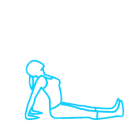
3. Bhujanga Asana: This is also called the Cobra Pose. It works on the shoulders, back, arms and other internal organs.

4. Yoga Spinal Twists: This works on your abdominal region and your entire digestive system. Spinal Twists help in burning calories and toning the abs. This is a good yoga for weight loss. Likewise there are many other poses which help in weight loss. One has to learn under guidance and perform slowly.

Yoga for weight loss will be effective only if combined with a proper diet. Eliminate the junk food and carbonated drinks from your diet. Include lot of greens, pulses, sprout, salads and fruits in your food intake to provide the body with the necessary proteins and vitamins. Do not break your yoga routine; do it regularly with dedication. The results may not be very quick but be patient and keep practicing yoga for weight loss. It is important to do yoga under an expert’s guidance. Yoga for weight loss will also result in a toned body, flexible body, less stress and anxiety, increase in concentration, strengthening of physical and mental health.

Read about Natural Slimming Pills. Also know powerful Fat Loss Workout.

Healthy Ways To Grow Taller With Yoga Tips and Exercises To Maintain The Right Posture And Breath

Monday, February 7th, 2011

yoga teacher trainingBy Louis-Philippe Gauthier

Sivananda Yoga is a classical system of yoga and it may help you grow taller. It is based on a five-point system that can help men develop physical, mental, and spiritual health by promoting proper exercise, breathing, relaxation, diet, and positive thinking and meditation to achieve physical, mental, and spiritual well-being. Sivananda Yoga philosophy to yoga represents a synthesis of classic yoga teachings, integrating the principles of the four main yoga traditions of India: bhakti yoga, jnana yoga, karma yoga, and raja yoga.

It is believed to be related to the same root that gave rise to the words grow and taller in English. Sivanada yoga uses special sounds as instruments to focus and still the mind. The sages of yoga from time immemorial have maintained that the universe was born of vibration, or sound. Therefore, sound occupies a sacred role in yoga. Certain sounds are believed to have sacred powers. One of the most famous of these sounds is the universal, untranslatable hummmm.

This Article provide information on specific yoga practices and techniques, such as physical postures, breathing exercises and meditation, so that you can begin to practice yoga yourself as you feel ready to begin to grow taller.

First, you must put yourself in the center position that is the primary step to successful yoga, while maintain a straight back, sit down on the ground slowly. Keep your elbows tucked under your armpits and raise your fingers towards the sky. Next, softly put your legs under your bum while maintaining your shoulders aligned. Your can now begin to see yourself feeling really calm and peaceful, the grass is green and the sun is bright high. You believe your in a dream, but, it feels so real that you could smell the drops of morning water in your nose. suddenly, a noise comes out to your ears, you turn around to realize its the water from the sink running behind you. You did it, you were just more aware of how your mind affects what is around you.

Now you can see yourself begin to grow taller and healthy to obtain anything the you desire. Concentrate on being in a meditative state, once in a profound state of meditation, start taking deep inhalations and evacuate all your stress. Avoid any contact with non-natural things like anything transformed that you find in cities. In order to have a perfect balance you must limit the toxicity of what you receive and you attain that with strong force of will through yoga meditation to grow taller.

Centre yoga is one of the most widely practiced approaches to Sivananda yoga. It is taught at nearly 80 Sivananda Centres throughout the United States and the rest of the world. More than 15,000 teachers of yoga throughout the world have been trained in this approach of yoga to grow taller. Instruction is given for Beginners in yoga, which teaches the rest of the basic yoga postures and exercises, and introduces the principles of proper diet, positive thinking, and meditation. This course is also a five-class series, with each class lasting 90 minutes. Additional classes are offered in intermediate and advanced yoga postures, as well as in meditation.

These classes last for 90 minutes and follow a prescribed protocol. They begin with approximately 20 minutes of two basic breathing exercises. Breathing exercises are followed by more than an hour of physical exercises, which are comprised of 12 basic yoga postures. Each class concludes with a long, deep relaxation. In addition to instruction in classic Sivananda Yoga, a variety of classes are frequently available that are tailored to specific needs.

For instance, Gentle Yoga, performed in chairs, can be especially helpful for seniors and the physically impaired. Also, it can help you to develop stability in performing headstands while overcoming fear. Yoga for kids presents yoga to teenagers 14 to 16 years of age. In addition, a wide range of classes and workshops are offered in vegetarian cooking, yogic cleansing practices, yogic breathing, and other topics related to health and well-being.

But, since having yoga training is not available for everyone trough this internet page I will try to help you guys learn as much as you can on how you can practice these exercises at home to grow taller. There are more positions of yoga which are to complete your original training. Unfortunately, before you learn about them you have to make sure you keep a straight posture it will help you a lot to grow taller. Having a bad back is unhealthy and could result in possible injuries.

To know more about ways of growing taller trough regular exercises and healthy posture and other natural ways remember to look up this information at http://www.icangrowtaller.com

For Free information on how to grow taller 4 smarts with a special program http://www.growtaller4smarts.biz

Open Your Heart And Access Courage With Yoga

Friday, February 4th, 2011

yoga teacher trainingBy Elle Garfield

“Courage faces fear and thereby masters it.” Martin Luther King, Jr

During my first yoga teacher training in 2004, I learned how to move into upward facing bow or wheel pose, which is an advanced back bending, heart opening pose thought to require a great deal of strength. It’s done by lifting the body up into a bow as you press your hands and feet into the floor. It was not my goal to learn this pose nor was it the objective of the course. It came to me as the result of all the increased opportunities to practice the basic postures I was learning to teach and the more challenging postures I found easier to access over time.

I had decided to take the teacher training that year because I felt stuck. Having accomplished many personal and professional goals I had set out to attain I still found that I was holding back. I was afraid to take that next step required to live more authentically and to achieve my aspirations. I wanted to make the transition from working at a family service agency and a psychological clinic to opening up my own private practice and offering the most effective methods to help people struggling with anxiety and depression.

Yoga had been my support, my friend for a very long time. My love of yoga started over 30 years ago when I took a Hatha yoga class as an undergraduate in college. Since then yoga has been calling me back to it’s healing embrace again and again. At times I would turn away from my practice, thinking I was too busy or too unfamiliar with it to be consistent, but I always came back especially during difficult times when my anxiety was high or the depression I was feeling held me back.

So in 2004 I was ready to immerse myself in the practice and study of yoga. As a student of the training I had many teachers in the form of books, gurus, teachers with varying degrees of experience and my fellow students. Some teachers helped me feel stronger and more confident feeling the power that I was able to tap into through the regular practice of this ancient art. Some helped to keep me humble and become accepting of being human and making mistakes. Many teachers were extraordinarily compassionate and because of that I was encouraged to begin to let go and open my heart more and more fully and joyfully even when I felt afraid to do so.

At first I gravitated to teachers who were very strong and disciplined. My logical mind told me the strength and confidence I lacked was the key to overcoming my fear. As I felt myself get stronger I started to try the more difficult poses, my confidence lifted. Still, I wasn’t able to come up into a full wheel pose. Something stopped me just short of it’s full expression. I learned that the muscle power I lacked was only part of the issue for me.

During the course I was introduced to a very compassionate teacher who explained we could create a safe space in our bodies so that the heart can open with ease. Forcing an opening only causes the heart to close more. She explained one way to create safety in this pose is to bring the shoulder blades together in the back so that the blades actually act as a shield for the heart in the back of the body so the heart can open freely in the front, just naturally lifting up toward the sky. She showed us a gentle way to bring the shoulder blades together by reaching our hands around the ankles of someone standing behind us. Logically, I couldn’t understand how this would help lift me into the pose but when I tried it myself I went right up with ease. Feeling triumphantly free in that moment, my heart fully open, I felt as if a wall had come down.

Having this experience showed me that my body was actually built to protect the most vulnerable part of me. I was able to relax and in a sense step out of the way allowing something natural to happen. I could feel my heart opening without force or really even trying very hard.

I began to want to live more and more of my life whole-heartedly, coming from an open heart. I began to see ways in which I was holding myself back thinking that this was the safe thing to do when in reality it was hurting me and limiting my life. Instead of trying to keep myself safe I began to work on aligning myself with integrity, compassion and trust. This was not something I was able to do on my own. Reaching out for help became a regular part of my spiritual practice.

For most of my life I treated asking for help as a crime I had no desire to commit, as a weakness that could possibly lead to more pain. In actuality I found it necessary and essential to continuing on a spiritual path. In our culture we value independence to the point of dysfunction at times. It usually takes quite a blow to our ego before we are able to admit our powerlessness and the need for help. And when we do reach out for aid something transforms inside of us opening us to all the possibilities in the universe. Paradoxically, this sort of dependence helps us to be more independent in healthier ways. We are starting to develop the courage to change.

The origin of the word courage actually comes from a Latin word cormeaning heart. Courage was what I needed more of to move into wheel pose and to move forward in my life to become the person I was meant to be.

Later that year I changed my name from my given name, Eileen to a name that had more meaning for me. I opened my own business and found a teacher that helped me cultivate effective practices shown to help with anxiety and depression. My journey isn’t over yet of course. I continue in my daily yoga practice to call on the qualities of the heart to help me navigate the ups and down of my life. I still get stuck and allow fear and doubt to keep me closed at times. Only now I have less tolerance for suffering and I’m more willing to ask for help, take the steps necessary to get out of my own way and move forward coming from an open heart.

If you are feeling stuck don’t let fear stop you from moving forward. Try something different, ask for the help and courage you need and allow your heart to lead you. The joy and happiness this is sure to bring is your birthright.

*Not every yoga pose is for every body so as with any exercise program check with your medical professional to make sure a practice is safe for you.

Awareness Counseling is a private practice that specializes in helping adults and families struggling with anxiety and depression using traditional therapy and mind/body methods that are intentionally designed to bring your life into balance. The result is more joy, freedom and enthusiasm for life. The founder, Elle Garfield, ACSW uses an effective combination of methods including cognitive/ behavioral, experiential, mindfulness, bibliotherapy, and Life Force yoga to help clients gain freedom from fear.

For more information go to www.Awareness-counseling-mi.com or Call Elle Garfield at 248-961-4081 or email egarfield10@gmail.com today.